
Table of contents [Show]
The Sacred Summit: History of Tungnath Temple
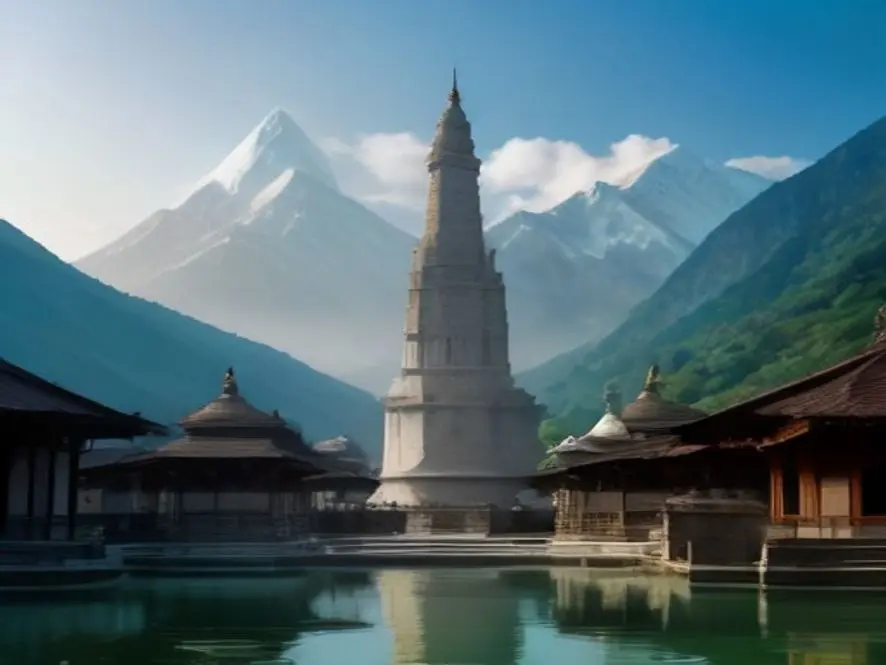
Nestled amidst the majestic peaks of the Garhwal Himalayas in Uttarakhand, the Tungnath Temple stands as a testament to profound faith and ancient legends. At an astounding altitude of 3,680 meters (12,073 ft) above sea level, it holds the unparalleled distinction of being the highest Shiva temple in the world and the highest among the revered Panch Kedar shrines. Located in the picturesque Rudraprayag district, just below the Chandrashila peak, Tungnath is more than just a temple; it's a spiritual beacon steeped in history and mythological lore.
Origins Rooted in the Mahabharata
The history of Tungnath Temple is intimately intertwined with the epic Mahabharata, a tale that resonates deeply within Hindu culture. According to ancient legends, after the devastating Kurukshetra War, the Pandavas were consumed by remorse for the immense bloodshed, including the killing of their own kin and revered gurus. To atone for their sins and seek the blessings of Lord Shiva, they embarked on a pilgrimage to the Himalayas.
However, Lord Shiva, aware of their guilt, initially wished to avoid them. He assumed the form of a bull and vanished into the ground at Guptkashi. Undeterred, the Pandavas pursued him. It is believed that the bull's body subsequently reappeared in five different locations, each becoming a sacred site dedicated to Lord Shiva, collectively known as the Panch Kedar. At Tungnath, it was Lord Shiva's arms that emerged in the form of the buffalo, and since then, His arms are worshipped here.
The Panch Kedar Connection
The Panch Kedar refers to a group of five sacred shrines dedicated to Lord Shiva, scattered across the Garhwal Himalayas. Each temple enshrines a different part of Lord Shiva's body that manifested after the Pandavas' pursuit:
- Tungnath: The arms (Bahu)
- Kedarnath: The hump (Kukubh)
- Rudranath: The face (Mukh)
- Madhyamaheshwar: The navel (Nabhi)
- Kalpeshwar: The hair (Jata)
The construction of these temples, including Tungnath, is traditionally attributed to the Pandavas themselves, built to honor Lord Shiva and seek ultimate salvation. This profound connection to the Mahabharata epic imbues Tungnath with immense spiritual significance, drawing devotees and seekers from across the globe.
A Timeless Abode of Lord Shiva
While its exact age is lost to the mists of time, the Tungnath Temple is believed to be over 1000 years old, standing resilient against the harsh Himalayan elements. Its ancient stone architecture, though simple, exudes a timeless charm and a powerful spiritual aura. The journey to Tungnath is itself a pilgrimage, offering breathtaking views and a chance to connect with the divine in a serene, untouched landscape.
As you stand before this majestic shrine, you can almost feel the echoes of the Pandavas' devotion and the omnipresent energy of Lord Shiva. The history of Tungnath is not merely a collection of facts; it is a living narrative of faith, penance, and the enduring spiritual heritage of India. For those who wish to delve deeper into the tales of devotion surrounding Lord Shiva, exploring narratives such as Shiv Tandav Stotra Ki Katha can further enrich the spiritual journey.