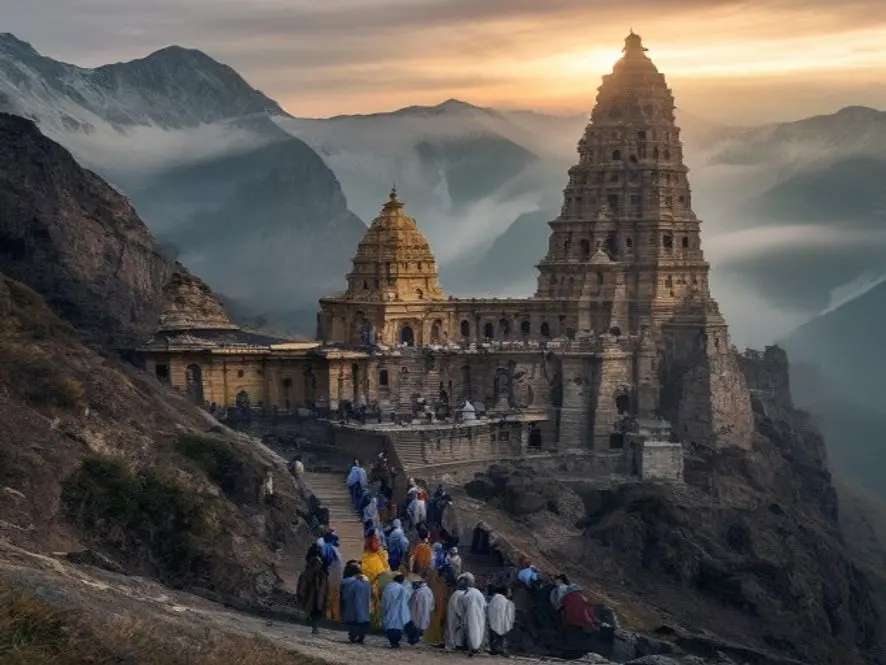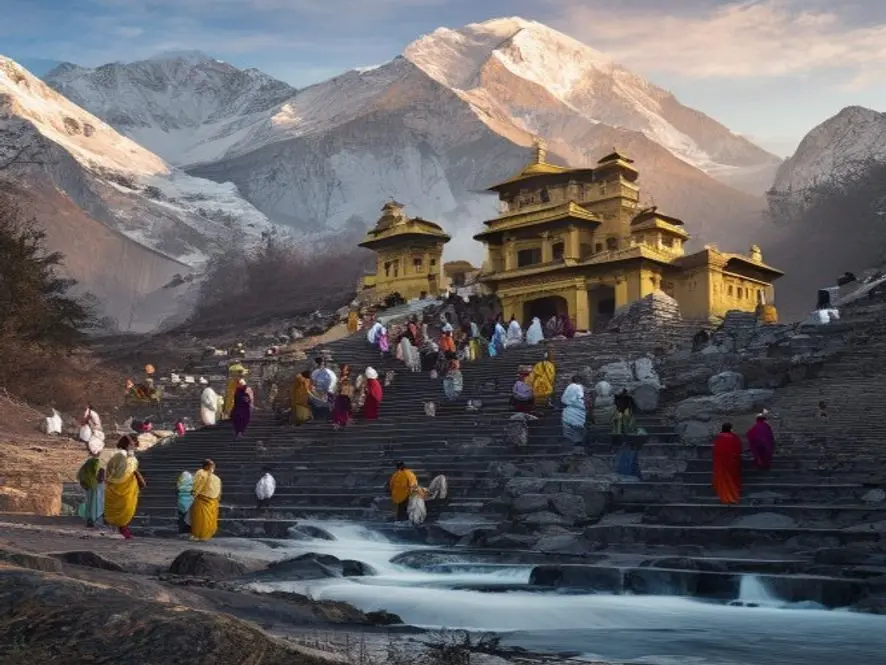
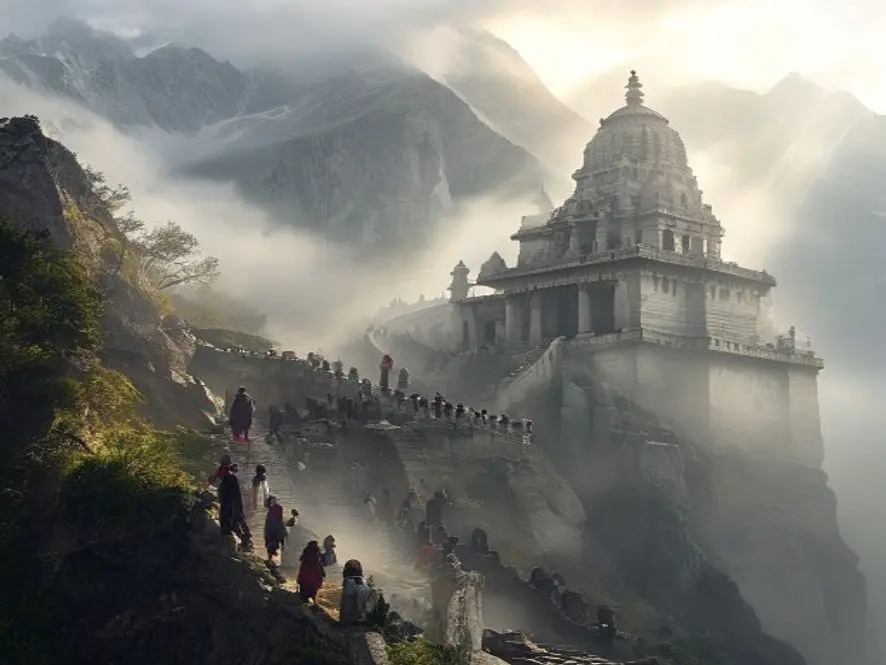
Nestled amidst the majestic Garhwal Himalayas, Badrinath Dham is more than just a temple; it's a profound spiritual experience that draws countless devotees each year. As one of the most revered pilgrimage sites in India, it holds a special place in the hearts of those seeking divine connection. Here at Prabhukedwar, we want to help you prepare for this sacred journey with practical, local insights.
Table of contents [Show]
- 1 The Enduring Significance of Badrinath Dham
- 2 When to Plan Your Badrinath Yatra
- 3 Reaching Badrinath Dham
- 4 What to Expect at Badrinath Temple
- 5 Accommodation and Food Facilities
- 6 Nearby Attractions to Explore
- 7 Essential Travel Tips for Your Badrinath Yatra
- 8 Frequently Asked Questions about Badrinath Dham Yatra
- 8. 1 When is the best time to visit Badrinath Dham?
- 8. 2 Do I need to trek to reach Badrinath Temple?
- 8. 3 What are the main rituals performed at Badrinath Temple?
- 8. 4 What are some significant places to visit near Badrinath Dham?
- 8. 5 What kind of accommodation is available in Badrinath?
- 8. 6 Are there any specific safety tips for the Badrinath Yatra?
- 9 Conclusion
The Enduring Significance of Badrinath Dham
Badrinath is dedicated to Lord Badrinarayan, another name for Lord Vishnu, one of the principal deities of the Hindu Trinity. Its religious importance is immense, being a crucial part of both the smaller Chota Char Dham Yatra within Uttarakhand and the larger, all-India Char Dham circuit. The temple also has a deep historical connection with Adi Guru Shankaracharya, the great Hindu spiritual leader, who is credited with its revival.
It is believed that taking a holy dip in the Alaknanda River, which flows by the temple, purifies the soul. Many pilgrims also offer oblations to their ancestors here with the help of local priests, fulfilling ancient traditions.
Interestingly, Badrinath is also one of the Adi Guru Shankaracharya's profound legacy in Uttarakhand.
The Legend Behind the Name 'Badrinath'
The name 'Badrinath' itself carries a beautiful mythological tale. Legend has it that when Lord Vishnu, in his childhood form of Nar-Narayana, was performing penance to defeat the demon Sahasrakavacha, Goddess Lakshmi appeared as a plum tree (known as 'Badri' in Sanskrit). She covered Narayana from all sides, shielding him from the harsh cold, rain, storm, and snow of the Himalayas. This act of protection gave the place its revered name, Badrinath.
When to Plan Your Badrinath Yatra
Due to the extreme weather conditions in the high Himalayas, Badrinath Temple is open for pilgrims for approximately six months each year, typically from late April to early November. The best time to visit is generally between May and November, as this period helps you avoid the heavy monsoon rains that can lead to road closures and difficult travel conditions.
If you're planning a wider pilgrimage, you might also find our guide on the best time to visit Gangotri and Yamunotri useful.
Reaching Badrinath Dham
Badrinath is unique among the Char Dhams in that the temple is located right in Badrinath village, where buses and taxis drop you off. There is no need for a long trek to reach the main temple itself.
Travel from Gaurikund (for Char Dham Pilgrims)
For those completing the Char Dham Yatra in the traditional order (Yamunotri, Gangotri, Kedarnath, Badrinath), the journey from Gaurikund (near Kedarnath) to Badrinath is a significant one. This route covers approximately 300 km and can take 10-12 hours by road. Public buses and shared taxis are common modes of transport for pilgrims.
What to Expect at Badrinath Temple
A day at Badrinath is a deeply spiritual experience. The temple, a striking structure with its colorful facade, houses the revered image of Lord Badrinarayan.
Darshan and Rituals
The temple offers various pujas and rituals throughout the day. In the mornings, significant activities include Mahabhishek (ablution), Abhishek, Gitapath, and Bhagavat Puja. In the evenings, Geet Govinda and Aarti are performed. Recitations from Vedic scriptures like Ashtotram and Sahasranama are part of most rituals. Unlike some temples, many of these practices are performed openly in front of devotees.
After the evening aarti, the decorations are removed from the idol, and sandalwood paste is applied. This paste, known as prasad, is then distributed to devotees the following day during Nirmalaya Darshan. Common prasad offerings include sugar balls and dry leaves.
Accommodation and Food Facilities
While Badrinath may not offer five-star luxury, there are several decent and affordable accommodation options available. You'll find a range of hotels, GMVN (Garhwal Mandal Vikas Nigam) guest houses, tourist lodges, and Dharamshalas that provide comfortable stays for pilgrims at nominal fees. Food facilities are also readily available, catering to the needs of travelers.
Nearby Attractions to Explore
Beyond the main temple, the Badrinath region offers several other spiritually significant and naturally beautiful sites:
Mata Murti Temple
Located close to Badrinath Dham, this Devi temple is dedicated to Goddess Mata Murti, believed to be the mother of Lord Badrinarayan. A local fair is organized around this temple, usually in September.
Ganesh Gufa (Mana Village)
Situated in Mana village, about 4 km from Badrinath, this natural cave holds immense mythological importance. It is believed to be the spot where Lord Ganesha transcribed the epic Mahabharata as dictated by Maharishi Ved Vyas. To reach Ganesh Gufa, you can take a shared taxi to Mana village (3 km) and then a brisk 1 km hike. Do note that the hike involves a steep climb, which might be challenging for elderly visitors.
Mana village itself is a fascinating place, often called India's 'last village' before the Tibetan border. It's also the starting point for the scenic Vasudhara Falls trek.
Narada Shila
This is another significant rock formation near the Badrinath temple, named after the divine sage Narada.
Panch Badri Temples
Badrinath is also part of a wider circuit known as the Panch Badri, which includes Yog Dhyan Badri, Bhavishya Badri, Adi Badri, and Vriddha Badri, each with its own unique history and significance.
Essential Travel Tips for Your Badrinath Yatra
- Dress in Layers: The weather in the Himalayas can be unpredictable, even in summer. Pack warm clothes, including thermals, sweaters, and a good jacket.
- Acclimate to the Altitude: Badrinath is at a high altitude. Give yourself time to adjust upon arrival to avoid altitude sickness. Drink plenty of water and stay hydrated.
- Check Permits and Registration: Ensure you have all necessary permits and have completed any required online registration for the Char Dham Yatra before you begin your journey.
- Prepare for the Roads: Himalayan roads are often winding and narrow. Travel can be slow, so plan your itinerary with ample buffer time.
- Book Accommodation Early: Especially during peak pilgrimage seasons, the area can get crowded. Booking your stay in advance is highly recommended.
- Consider Travel Insurance: It's a smart precaution in case of unexpected events or medical emergencies in a remote region.
- Stay Informed: Check local weather forecasts and road conditions before and during your travel.
While Badrinath is a Vishnu temple, many pilgrims also undertake the Panch Kedar pilgrimage, which offers a different, yet equally profound, spiritual experience in the Garhwal region.
Frequently Asked Questions about Badrinath Dham Yatra
When is the best time to visit Badrinath Dham?
The best time to undertake the Badrinath Yatra is between May and November. The temple itself opens in late April and closes in early November. This period offers the most favorable weather conditions, avoiding the heavy monsoon rains that can cause road blockages and make travel difficult.
Do I need to trek to reach Badrinath Temple?
No, you do not need to trek to reach the main Badrinath Temple. Buses and taxis will drop you directly in Badrinath village, where the temple is located.
What are the main rituals performed at Badrinath Temple?
Key morning rituals include Mahabhishek, Abhishek, Gitapath, and Bhagavat Puja. In the evenings, Geet Govinda and Aarti are performed. Devotees can also take a holy dip in the Alaknanda River and offer oblations to ancestors.
What are some significant places to visit near Badrinath Dham?
Nearby attractions include the Mata Murti Temple, Ganesh Gufa (in Mana village), and Narada Shila. Mana village itself is worth exploring, and it's also the starting point for the trek to Vasudhara Falls.
What kind of accommodation is available in Badrinath?
Badrinath offers a range of accommodation options including hotels, GMVN guest houses, tourist lodges, and Dharamshalas. These provide decent and affordable stays, though they typically do not offer five-star luxury.
Are there any specific safety tips for the Badrinath Yatra?
Yes, essential safety tips include dressing in layers for unpredictable weather, acclimatizing to the high altitude by drinking plenty of water, checking for necessary permits and registrations, being prepared for winding Himalayan roads, booking accommodation well in advance, and considering travel insurance for unforeseen circumstances.
Conclusion
A pilgrimage to Badrinath Dham is a truly spiritually enriching and memorable experience. With proper planning and an understanding of what to expect, your journey to this sacred Himalayan abode of Lord Vishnu will undoubtedly be a life-changing one. We wish you a blessed and safe yatra!