
Table of contents [Show]
Kedarnath Temple: A Journey Through Its Ancient History and Sacred Legends
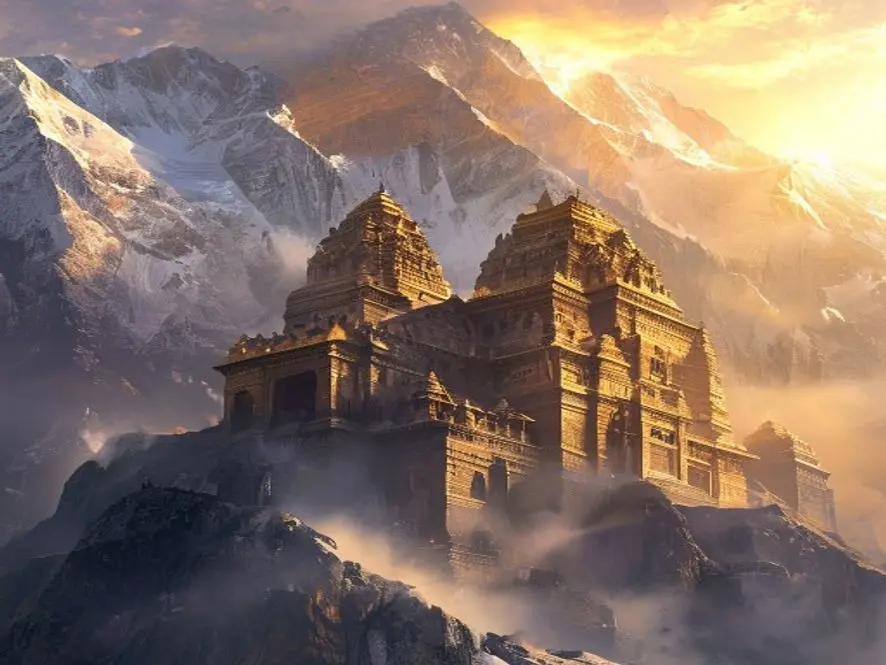
High in the majestic Garhwal Himalayas of Uttarakhand, at an altitude of about 3,583 meters, stands the revered Kedarnath Temple. This ancient shrine, dedicated to Lord Shiva, is not merely a destination but a profound symbol of unwavering faith and resilience. It's one of the holiest pilgrimage sites for devotees, drawing thousands each year to its challenging yet spiritually rewarding path. The story of Kedarnath is a rich tapestry woven with threads of mythology, documented history, and divine encounters that have shaped Indian spiritual tradition for over a millennium.
The Ancient Roots of Kedarnath
While the exact origins of Kedarnath Temple remain shrouded in the mists of time, historians and spiritual traditions agree that the temple structure we see today is more than a thousand years old. It has stood steadfast against the harsh Himalayan environment, surviving extreme weather conditions, including the devastating floods of 2013, a testament to its divine protection and robust construction of massive stone slabs.
A pivotal figure in the temple's preservation was the great philosopher and spiritual teacher, Adi Shankaracharya. In the 8th century, he is believed to have revived and reconstructed the temple, solidifying its status as one of the most important pilgrimage sites in the Himalayan region. His Adi Shankaracharya's profound legacy in Uttarakhand continues to resonate across India's spiritual landscape.
Legends That Echo Through Time
The history of Kedarnath is deeply intertwined with a wealth of captivating legends, passed down through generations. These stories reinforce the temple's spiritual significance and its place in Hindu mythology.
The Pandavas and Lord Shiva's Bull Form
One of the most widely known legends connects Kedarnath to the epic Mahabharata. After their victory in the Kurukshetra war, the Pandava brothers sought Lord Shiva's blessings to atone for the sins of killing their kin. However, Shiva, still displeased by the war's destruction, eluded them. While fleeing, he took refuge at Kedarnath in the form of a bull.
Bhima, the second Pandava, recognized the divine bull near Guptakashi. When he tried to seize the bull by its tail and hind legs, Shiva burrowed into the ground. His body parts then reappeared at five different locations in the Himalayas, forming the profound significance of the Panch Kedar pilgrimage. The hump emerged at Kedarnath, which is why the Shiva Linga inside the temple is a unique conical rock formation, worshipped as Lord Shiva manifested in his Sadashiva form. The arms appeared at ancient history of Tungnath Temple, the face at Rudranath, the navel and stomach at Madhyamaheshwar, and the hair at Kalpeshwar. The Pandavas, pleased by this manifestation, built temples at each of these sites.
The Jyotirlinga and Shiva's Abode
Kedarnath is revered as one of the twelve sacred Jyotirlingas, considered the most potent shrines of Lord Shiva. It holds the distinction of being the highest among all Jyotirlingas, symbolizing Shiva's direct presence in this divine space.
Another legend states that sages Nara and Narayana, dual incarnations of Lord Vishnu, performed intense penance in the Himalayas. Pleased by their devotion, Lord Shiva appeared before them and, at their request, manifested as a Jyotirlinga at Kedarnath so that devotees could worship him directly.
The Curse of the Cowherd and Kedar Ganga
An intriguing tale speaks of a cowherd who witnessed Lord Shiva in his bull form. Fearing for his safety, he attempted to reveal this divine truth to others. As a consequence, Shiva cursed him to turn into a stone, which pilgrims now worship. This incident serves as a reminder of the profound nature of divine encounters.
Flowing gracefully near the temple is the sacred Kedar Ganga river. Legend has it that this river originated from the waters that washed Lord Shiva’s body after his transformation back into a bull, further sanctifying the entire region.
Lord Bhairav and Sage Durvasa
The fierce manifestation of Lord Shiva, Lord Bhairav, was once worshipped at Kedarnath. It is said he later chose to reside on a nearby hill, now known as Bhairavnath Temple, as devotees were primarily drawn to Shiva's more benevolent forms. A visit to Bhairavnath Temple is considered an essential part of the Kedarnath pilgrimage, reflecting the harmonious balance of strength and compassion in devotion. The region is also associated with the penance of Sage Durvasa, adding another layer to its spiritual heritage.
The Path to Kedarnath
Reaching Kedarnath Temple is an act of devotion in itself. The temple is not directly accessible by road and requires a challenging 17-kilometer uphill trek from Gaurikund. This journey, though arduous, has been undertaken by pilgrims for over a thousand years, with ancient travelers documenting their spiritually rewarding experiences.
What to Expect at the Temple
The temple itself is a marvel of ancient architecture, built of massive stone slabs on a large rectangular platform. Large grey steps lead to the Holy Sanctum, some bearing inscriptions in the Pali language. Inside, the walls are adorned with figures of various deities and scenes from mythology, creating an immersive spiritual atmosphere where pujas and archanas are performed on the unique conical rock formation.
Frequently Asked Questions About Kedarnath Temple
How old is Kedarnath Temple?
Kedarnath Temple is believed to be more than a thousand years old. While its exact origins are not precisely dated, historical traditions suggest pilgrims have been visiting the shrine for over a millennium.
What is the main legend behind Kedarnath Temple?
The most prominent legend involves the Pandavas. After the Mahabharata war, they sought Lord Shiva's forgiveness. Shiva, disguised as a bull, eluded them. When caught by Bhima, Shiva disappeared, and his hump reappeared at Kedarnath, forming the unique conical Shiva Linga worshipped today. This event is central to the Panch Kedar pilgrimage.
Who rebuilt Kedarnath Temple?
According to historical traditions, the great philosopher and spiritual teacher Adi Shankaracharya is credited with reviving and reconstructing the Kedarnath Temple in the 8th century, playing a crucial role in its preservation as a major pilgrimage center.
What is the significance of the Shiva Linga at Kedarnath?
The Shiva Linga at Kedarnath is unique; it is a conical rock formation believed to be the hump of Lord Shiva, who took the form of a bull to avoid the Pandavas. It is worshipped as Lord Shiva manifested in his Sadashiva form and is one of the twelve sacred Jyotirlingas, the highest among them.
Is Kedarnath Temple part of the Char Dham Yatra?
Yes, Kedarnath Temple is one of the four major sites in India's Chota Char Dham pilgrimage of the Northern Himalayas, alongside Badrinath, Gangotri, and Yamunotri. It is also the first of the Panch Kedar pilgrimage sites. Many pilgrims combine their visit to Kedarnath with the Badrinath Dham Yatra.