Table of contents [Show]
- 1 Discovering Badrinath: A Sacred Journey in the Himalayas
- 2 History and Significance of Badrinath
- 3 Planning Your Badrinath Yatra
- 4 The Badrinath Experience: What to Expect
- 5 Accommodation and Travel Tips
- 6 Visitor Notes
-
7
Frequently Asked Questions About Badrinath Dham Yatra
- 7. 1 How long does the Badrinath Yatra typically take?
- 7. 2 Is a trek required to reach Badrinath Temple?
- 7. 3 What is the traditional order for the Char Dham Yatra?
- 7. 4 What are the weather conditions like in Badrinath?
- 7. 5 Are there any medical requirements for the Badrinath Yatra?
- 7. 6 Can I visit Badrinath without a tour package?
Discovering Badrinath: A Sacred Journey in the Himalayas
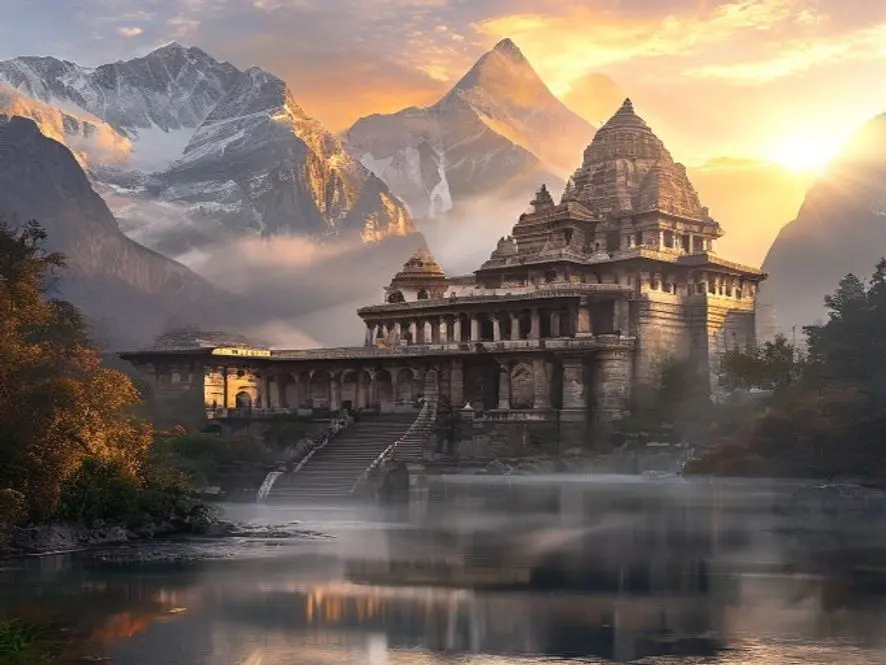
Nestled amidst the majestic Garhwal Himalayas in Uttarakhand, the Badrinath Temple stands as one of India's most revered pilgrimage sites. Dedicated to Lord Vishnu, this sacred abode, situated at an altitude of about 3,133 meters on the banks of the Alaknanda River, draws countless devotees each year. It's not just a temple; it's a spiritual experience, forming a crucial part of the Char Dham Yatra and holding the most significant position among the Panch Badri temples.
History and Significance of Badrinath
The Badrinath Temple's origins are deeply rooted in ancient lore, but its revival in the 8th century by the philosopher-saint Adi Shankaracharya solidified its place as a pivotal center of Hindu faith. It is believed that Lord Vishnu performed rigorous penance here, and his consort, Goddess Lakshmi, took the form of a Badri (jujube) tree to shield him from the harsh sun. The temple's architecture, a unique blend of traditional Garhwali wooden style with Buddhist influences, houses 15 idols carved in black stone, with the main idol depicting Lord Vishnu in a meditative posture.
Badrinath is the final stop in the traditional Char Dham pilgrimage circuit, which begins from Yamunotri, then proceeds to Gangotri, Kedarnath, and finally Badrinath. For those interested in the profound impact of Adi Shankaracharya on Uttarakhand's spiritual landscape, exploring Adi Shankaracharya's legacy in Uttarakhand offers deeper insights.
Planning Your Badrinath Yatra
Mandatory Registration for Pilgrims
Before you begin your journey to Badrinath, it's essential to complete the Char Dham registration. This process provides you with a QR-based Yatra pass, which is verified at various checkpoints, especially near Joshimath and the temple area. You can complete your registration online through the official Tourist Care Uttarakhand portal or mobile application. For a detailed guide on the process, refer to our article on Char Dham Yatra online registration.
Best Time to Visit Badrinath
- May to June (Peak Season): The weather is pleasant, ranging from 8-19 degrees Celsius. However, expect heavy crowds, long darshan queues (2-3 hours), and higher accommodation rates. This period aligns with when most pilgrims undertake the full Char Dham Yatra.
- September to October (Recommended): This window is often preferred. The monsoon season has passed, roads are generally repaired, and the crowds thin out significantly. The valley appears lush and green, and darshan usually takes only 30-45 minutes. Temperatures are cool and comfortable, between 5-15 degrees Celsius.
The temple closes around October/November for the winter due to heavy snowfall and reopens around April each year. For specific dates, you can check the Char Dham Yatra opening and closing dates.
How to Reach Badrinath
Badrinath is well-connected by road, though the journey involves navigating winding mountain paths. No trekking is required to reach the temple itself, as buses drop you right in Badrinath village.
- By Air: The nearest airport is Jolly Grant Airport (Dehradun), approximately 317 km away. From there, you can hire taxis or take buses.
- By Train: Rishikesh (around 300 km) and Kotdwar (around 327 km) are the nearest railway stations. These stations are well-connected to major Indian cities.
- By Road: Badrinath is accessible by public buses and shared taxis from major gateway cities like Haridwar and Rishikesh. The journey from Gaurikund (near Kedarnath) to Badrinath is about 300 km and can take 10-12 hours. Buses from Badrinath to Rishikesh start as early as 4 AM. Many pilgrims start their journey from Rishikesh and Haridwar, which serve as spiritual gateways to the Himalayas.
The Badrinath Experience: What to Expect
Temple Darshan and Rituals
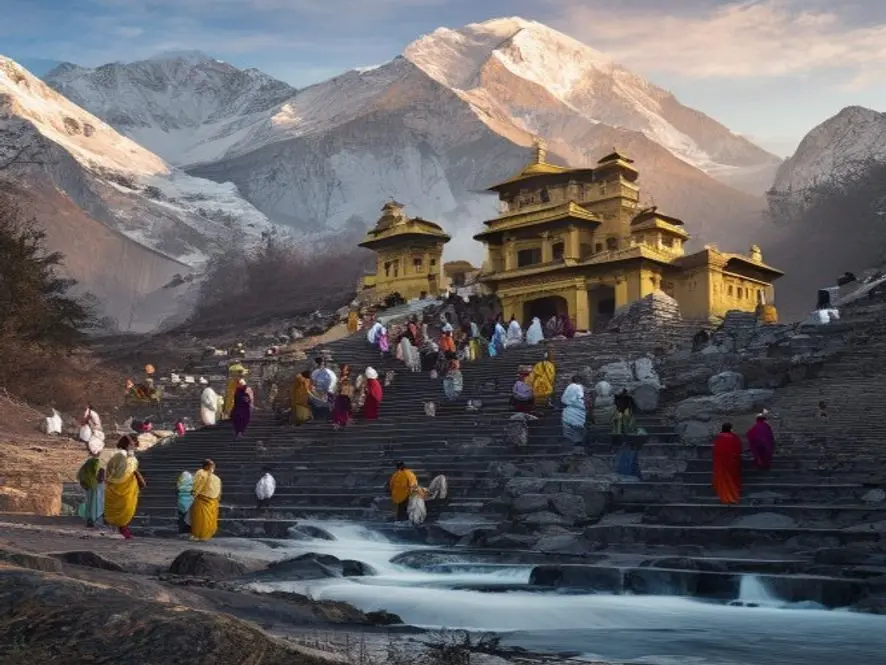
A visit to Badrinath Temple is a deeply spiritual experience. Pilgrims typically take a holy dip in the Tapt Kund, a natural hot spring near the temple, before proceeding for darshan. The temple timings and aarti schedules are important to check for a smoother visit. Inside, you'll witness the main idol of Lord Vishnu, along with other deities.
Nearby Attractions to Explore
While the temple is the main draw, Badrinath and its surroundings offer several significant sites:
- Tapt Kund: A natural thermal spring believed to have medicinal properties. A bath here is considered auspicious before entering the temple.
- Brahma Kapal: A flat platform on the banks of the Alaknanda River where Hindus perform rituals for their deceased ancestors.
- Mana Village: Known as the 'Last Indian Village' before the Indo-Tibetan border, it's just 3 km from Badrinath. It's rich in mythological tales and offers insights into local culture. From here, you can also trek to Vasudhara Falls.
- Valley of Flowers (Seasonal): A short drive and trek away, this UNESCO World Heritage site bursts into vibrant bloom during specific months, offering breathtaking floral vistas. Our guide to the Valley of Flowers trek can help you plan this seasonal detour.
We recommend spending at least two days in Badrinath to truly experience the temple and its serene surroundings.
Accommodation and Travel Tips
Accommodation options in Badrinath range from budget guesthouses to more comfortable hotels. For self-planned yatras, flexibility with bookings is key. Public buses and shared taxis are reliable modes of transport between the Dhams, allowing for spontaneous itinerary adjustments while respecting the traditional pilgrimage order.
Visitor Notes
- Always carry your registration pass and a valid ID.
- Pack warm clothing, even in summer, as mountain weather can be unpredictable.
- Stay hydrated and carry basic medications.
- Respect local customs and traditions.
Frequently Asked Questions About Badrinath Dham Yatra
How long does the Badrinath Yatra typically take?
If you are visiting Badrinath as part of the full Char Dham Yatra, the entire circuit usually takes 10-14 days by road. If visiting Badrinath alone, you might spend 2-3 days, including travel to and from a major hub like Rishikesh.
Is a trek required to reach Badrinath Temple?
No, there is no trek required to reach Badrinath Temple. Buses and taxis drop pilgrims directly in Badrinath village, where the temple is located.
What is the traditional order for the Char Dham Yatra?
The traditional and recommended order for the Char Dham Yatra is Yamunotri, followed by Gangotri, then Kedarnath, and finally Badrinath. This sequence moves from west to east.
What are the weather conditions like in Badrinath?
During the peak season (May-June), the weather is pleasant with temperatures between 8-19°C. In September-October, it's cooler, ranging from 5-15°C. Winters are extremely harsh, with heavy snowfall, making the temple inaccessible.
Are there any medical requirements for the Badrinath Yatra?
While specific medical certificates might be required for the Kedarnath trek, for Badrinath, general good health is advised due to the high altitude. It is always wise to consult a doctor before embarking on a high-altitude pilgrimage.
Can I visit Badrinath without a tour package?
Yes, it is entirely possible to plan a self-guided Badrinath Yatra. Many pilgrims rely on public buses, shared taxis, and flexible accommodation bookings to undertake the journey independently, similar to backpacking.