
Table of contents [Show]
Kedarnath: A Sanctuary in the Himalayas
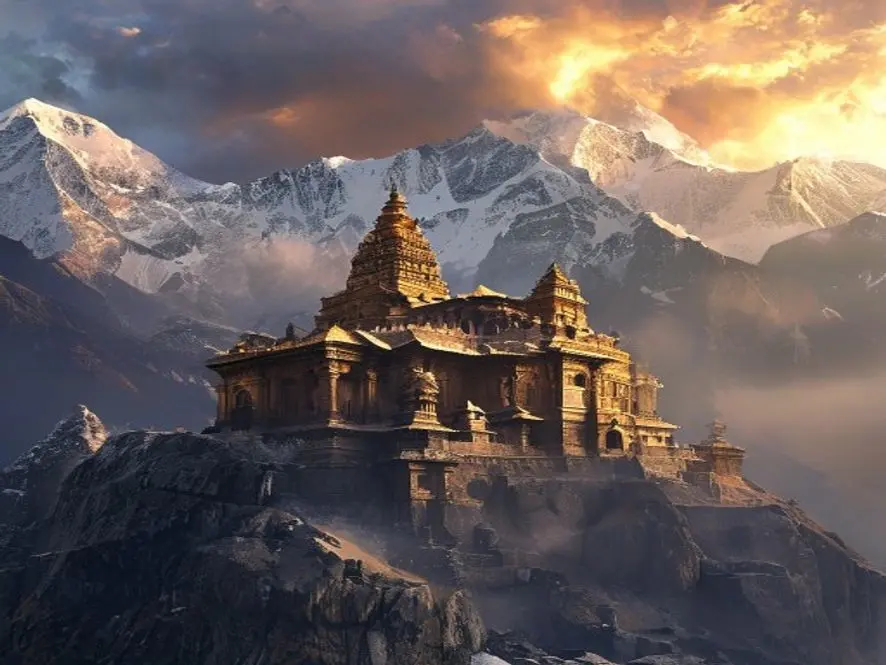
Nestled high in the Garhwal Himalayas of Uttarakhand, at an altitude of about 3,583 meters (11,750 feet) beside the Mandakini River, stands the revered Kedarnath Temple. This ancient shrine, dedicated to Lord Shiva, is not just a place of worship but a living testament to centuries of faith, resilience, and captivating stories. For thousands of pilgrims, the challenging journey to Kedarnath is a profound spiritual quest, a chance to connect with a divine past.
The Ancient Roots of Kedarnath Temple
A Temple More Than a Millennium Old
The exact date of Kedarnath Temple's original construction remains a topic of historical discussion, but it is widely believed to be more than a thousand years old. Some traditions even suggest its origins could trace back over 3,000 years, linking it to the epoch of the Mahabharata war. The temple itself is a marvel, built of massive stone slabs on a large rectangular platform, a testament to ancient engineering in a harsh environment.
Throughout its long history, Kedarnath has faced the formidable challenges of the Himalayan environment, enduring heavy snowfall, landslides, and earthquakes. Yet, it has consistently stood strong, a symbol of unwavering devotion and divine protection.
The Revival by Adi Shankaracharya
While the temple's initial construction is often attributed to the Pandavas, its revival and establishment as a major pilgrimage site are strongly associated with the great 8th-century philosopher and spiritual teacher, Adi Shankaracharya's enduring legacy. He is credited with reconstructing and preserving the shrine, solidifying its status as a pivotal center of devotion in the Himalayan region.
Legends of Kedarnath: Divine Tales
Kedarnath is steeped in rich Hindu mythology, with several powerful legends explaining its sacred origins.
The Pandavas and Lord Shiva's Bull Form
The most prominent legend traces the temple's genesis to the Pandavas, the heroes of the Hindu epic Mahabharata. After their victory in the Kurukshetra war, the Pandavas sought Lord Shiva's blessings to atone for the sins of killing their kinsmen. Lord Shiva, however, wished to evade them and took the form of a bull, hiding in the Garhwal Himalayas.
Undeterred, the Pandavas pursued him. Bhima, the strongest of the brothers, eventually cornered the bull at Kedarnath. As Bhima seized the bull, Lord Shiva disappeared into the ground, leaving behind his hump on the surface. It is on this very spot that the Kedarnath Temple is believed to have been built, and the conical rock formation within the sanctum is revered as Lord Shiva's hump, a manifestation of his Sadashiva form.
This legend also connects Kedarnath to the Panch Kedar pilgrimage. As Lord Shiva's bull form vanished, his body parts reappeared at five different locations: the hump at Kedarnath, arms at Tungnath Temple, face at Rudranath, navel and stomach at Madhyamaheshwar, and hair at Kalpeshwar. The Pandavas built temples at each of these sites, collectively forming the sacred Panch Kedar circuit.
The Meditation of Nara and Narayana
Another significant legend speaks of the twin sages, Nara and Narayana (believed to be avatars of Lord Vishnu), who performed intense meditation at Kedarnath for many years. Pleased by their profound devotion, Lord Shiva granted them a boon, agreeing to reside permanently at Kedarnath for the welfare of humanity. This legend underscores Kedarnath's importance as a place where divine presence was invoked through deep penance.
Shiva's Permanent Presence and the Ganga's Descent
It is also believed that Lord Shiva himself meditated at Kedarnath for an extended period, marking his eternal presence at this site. The ancient Skanda Purana further links Kedarnath to the sacred Ganga River, stating that Shiva released the holy stream from his matted hair here. Drinking these sacred waters is believed to free one from the cycle of rebirth and grant spiritual liberation (moksha).
Kedarnath's Spiritual Significance
Kedarnath holds an unparalleled position in Hindu spirituality:
- One of the Twelve Jyotirlingas: It is one of the twelve sacred Jyotirlingas of Lord Shiva, considered the highest and most important among them, signifying Shiva's manifestation as a column of cosmic light.
- Part of the Char Dham and Panch Kedar: Kedarnath is a vital shrine in Uttarakhand's Char Dham pilgrimage circuit and the first of the Panch Kedar temples, making it a cornerstone for devotees seeking Lord Shiva's blessings.
- Mentioned in Ancient Texts: Its sanctity is affirmed in ancient Hindu texts like the Mahabharata and the Skanda Purana, which detail its significance and the spiritual benefits of visiting.
- Path to Moksha: Devotees believe that sincere prayer and devotion at Kedarnath can absolve all earthly sins, leading to heaven (Swarga) and ultimately, spiritual liberation (Moksha).
Planning Your Pilgrimage to Kedarnath
How to Reach Kedarnath
Kedarnath Temple is not directly accessible by road. Pilgrims must undertake a challenging yet rewarding uphill trek of approximately 16-17 kilometers from Gaurikund, the nearest road head. The journey is arduous but offers breathtaking views of the Himalayan landscape.
Best Time to Visit
Due to the extreme weather conditions and heavy snowfall, Kedarnath Temple remains closed for six months during winter. The pilgrimage season typically runs from late April or early May to October or November. During these months, the weather is relatively milder, making the trek feasible and enjoyable.
What to Expect on Your Journey
A pilgrimage to Kedarnath is a test of faith and endurance. Expect a demanding trek through mountainous terrain, but also be prepared for an immensely spiritually rewarding experience. The air is crisp, the views are majestic, and the sense of devotion is palpable among fellow pilgrims.
Frequently Asked Questions (FAQs)
Who built the Kedarnath Temple?
According to Hindu legends, the Kedarnath Temple was originally built by the Pandavas, the heroes of the Mahabharata, to atone for their sins. Historically, the temple structure seen today is believed to have been revived and reconstructed by Adi Shankaracharya in the 8th century.
What is the main legend associated with Kedarnath?
The primary legend involves the Pandavas seeking Lord Shiva's blessings after the Mahabharata war. Shiva, in the form of a bull, tried to evade them but disappeared into the ground at Kedarnath, leaving his hump on the surface. The temple is built on this spot, and the hump is worshipped as Lord Shiva's manifestation.
How old is Kedarnath Temple?
The Kedarnath Temple is believed to be more than 1000 years old. Some historical traditions and mythological accounts link its origins to the time of the Mahabharata war, suggesting it could be over 3,000 years old, though the exact construction date is not definitively known.
What is a Jyotirlinga?
In Hindu tradition, a Jyotirlinga is a devotional representation of Lord Shiva, a radiant column or pillar of light. There are twelve such Jyotirlingas across India, and Kedarnath is considered the highest and one of the most sacred among them.
Why is Kedarnath considered so sacred?
Kedarnath is considered profoundly sacred because it is one of the 12 Jyotirlingas, a key shrine in the Char Dham and Panch Kedar pilgrimages, and is associated with ancient legends involving the Pandavas and sages Nara-Narayana. It is believed that worshipping here can lead to absolution of sins and spiritual liberation.