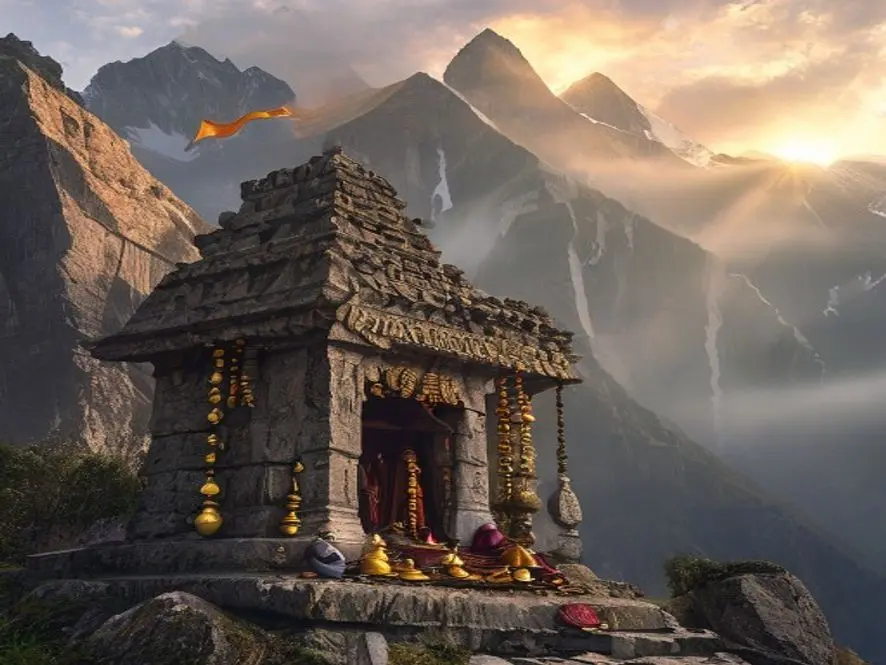
Uttarakhand, often lovingly called 'Devbhoomi' or the Land of the Gods, is a realm where every peak, river, and lake holds a sacred story. The two distinct yet deeply connected regions of Garhwal and Kumaon are rich tapestries woven with ancient folklore, revered local deities, and spiritual traditions that have shaped the lives of mountain communities for centuries. While mainstream Hindu gods are worshipped, it's the folk deities who truly resonate with the daily lives and hearts of the locals.
Table of contents [Show]
The Spiritual Fabric of Garhwal and Kumaon
The cultural landscape of Garhwal and Kumaon, though historically distinct, shares a profound spiritual connection. From wedding customs and faith in deities to vibrant folk songs like Jhoda and Chanchari, a shared spirit of cultural evolution binds these regions. This unity is perhaps best exemplified by the grand Nanda Devi Raj Jat Yatra, a 280 km pilgrimage held every twelve years, bringing devotees from both regions together to honor Nanda Devi.
Major Deities of the Himalayas
While the revered Char Dhams like Badrinath Dham (dedicated to Lord Vishnu) and Kedarnath Dham (a Jyotirlinga of Lord Shiva) draw pilgrims from across India, the local populace also holds specific folk deities close to their hearts. The origins of the sacred rivers Ganga and Yamuna at Gangotri and Yamunotri Dhams further underscore the region's spiritual significance.
Nanda Devi: The Daughter and Daughter-in-Law
Nanda Devi, along with her sister Sunanda Devi, is arguably the most popular and revered goddess in Kumaon, worshipped as the Isht Devi or Patron Deity by all Kumaonis. She is also deeply revered in Garhwal, embodying the emotional unity between the two regions, often referred to as the daughter of Kumaon and daughter-in-law of Garhwal.
- Folklore: One legend says Nanda and Sunanda were daughters of King Hemant Chand of Kumaon, part reincarnations of the Mother Goddess. Unhappy in their new royal abode, they fled back but were lost in the Himalayas, pursued by a demon. Evading capture, they jumped into a river, their divine souls returning to their maternal palace to be deified.
- Warrior Goddess: Another account identifies Nanda Devi as 'Ran Devi' or the War Goddess of Kumaon, invoked by warriors in battle. It's said she was brought to Kumaon by Chand Raja Baz Bahadur after defeating Garhwal and established in Kot Bhramri and Almora.
- Nanda Ashtami: A major festival in Kumaon dedicated to Goddess Nanda Devi, featuring grand fairs and rituals that unite communities.
- Nanda Devi Raj Jat Yatra: This epic pilgrimage, held every 12 years, is a powerful symbol of unity, drawing devotees from both regions on a 280 km journey.
Golu Devta: The God of Justice
Golu Devta is a prominent folk deity, especially powerful in the Kumaon region. Revered as the god of justice and conflict resolution, he is believed to ride a white horse, constantly checking on the welfare of his people. His temples, particularly the one at Almora, are unique; people leave written petitions seeking resolution for household issues and grievances.
- Migration of Faith: Traditionally, Golu Devta's temples were in rural areas, but with the migration of devotees, new temples have emerged in urban centers like Nainital and even Delhi, showcasing the enduring power of folk beliefs.
Mahasu Devata: Upholder of Righteousness
Similar to Golu Devta, Mahasu Devata is another powerful folk deity, particularly in Garhwal, also associated with justice and conflict resolution. Locals turn to him for remedies and fair judgments, reinforcing the deep-rooted belief in divine intervention for earthly matters.
Other Revered Folk Deities
Beyond the major deities, both Garhwal and Kumaon are home to a myriad of local gods and goddesses, each with their own stories and specific roles in community life:
- Kumaon: Bhumia (land god), Balchan, Nagnath (snake god), Bhandari Golla, Badhan, Narsingh, Lataul, Gabla, Chhurmal, Kashin Devta (Khawatari village), Haru (King Harish Chandra of Champawat, worshipped after death), Saim (god of boundaries), Bholanath (an incarnation of Lord Shiva, worshipped after a tragic royal tale), Anyari and Ujyali (popular goddesses), and Garh Devis (worshipped in cremation grounds on Amavasya nights).
- Garhwal: Jwalpa Devi, Dhari Devi, and Chandrabadni are important Shakti Peeths. Other deities include Narsingh, Bhairav, Nagaraja (believed to be a form of Krishna), and even the Pandavas and Draupadi. The pantheon is often headed by Durga and Mahadev, known by many local names like Bhagwati, Surkanda, Kali, Bhavani, and Nanda.
- Ancestral Worship: In Garhwal, ancestors known as Bhumiyal, meaning 'guardians of the land,' are deeply revered. Every village has its own Bhumiyal, worshipped in small stone shrines called 'Thaan'.
Mainstream Hinduism and Local Beliefs
While folk gods remain powerful, the region is also a significant center for mainstream Hinduism. Kedarnath, a renowned Jyotirlinga, is popularly believed to be where Adi Shankaracharya attained samadhi, a lore that connects South India to the North. Even today, temples in this region maintain connections with priest families from Karnataka, Kerala, and Tamil Nadu, reflecting a pan-Indian spiritual network. The region features temples of diverse architectural styles, including Northern Nagara, Southern Dravidian, and Western Maru-Gurjara. The ancient Jageshwar temple complex in eastern Kumaon, with nearly 200 temples built between the 7th and 10th centuries, mostly dedicated to Shiva, stands as a testament to this rich religious history.
FAQs About Garhwal and Kumaon Deities
Who are the main folk deities of Garhwal and Kumaon?
The most prominent folk deities are Nanda Devi (and her sister Sunanda Devi), Golu Devta, and Mahasu Devata. Nanda Devi is revered as a unifying goddess, while Golu Devta and Mahasu Devata are primarily associated with justice and conflict resolution.
What is the significance of Nanda Devi in Uttarakhand?
Nanda Devi is a highly significant goddess, worshipped as the patron deity of Kumaon and the daughter-in-law of Garhwal. She symbolizes the deep cultural and emotional unity between the two regions. Major festivals like Nanda Ashtami and the grand Nanda Devi Raj Jat Yatra are dedicated to her.
Why is Golu Devta known as the God of Justice?
Golu Devta is revered as the God of Justice because locals believe he actively intervenes in disputes and ensures fairness. Devotees often visit his temples, particularly in Almora, to leave written petitions seeking solutions to personal and household problems, trusting in his divine judgment.
Despite historical differences, Garhwal and Kumaon share many cultural traditions, including wedding customs, faith in common deities, and folk songs like Jhoda and Chanchari. The Nanda Devi Raj Jat Yatra is the biggest symbol of this unity, bringing together devotees from both regions in a shared pilgrimage.
Are there other local deities besides the well-known ones?
Yes, both regions have a vast pantheon of local deities. In Kumaon, gods like Bhumia, Nagnath, Haru, Bholanath, and goddesses like Anyari and Ujyali are worshipped. In Garhwal, besides the Shakti Peeths like Jwalpa Devi and Dhari Devi, deities like Narsingh, Bhairav, and ancestral guardians known as Bhumiyal are revered.