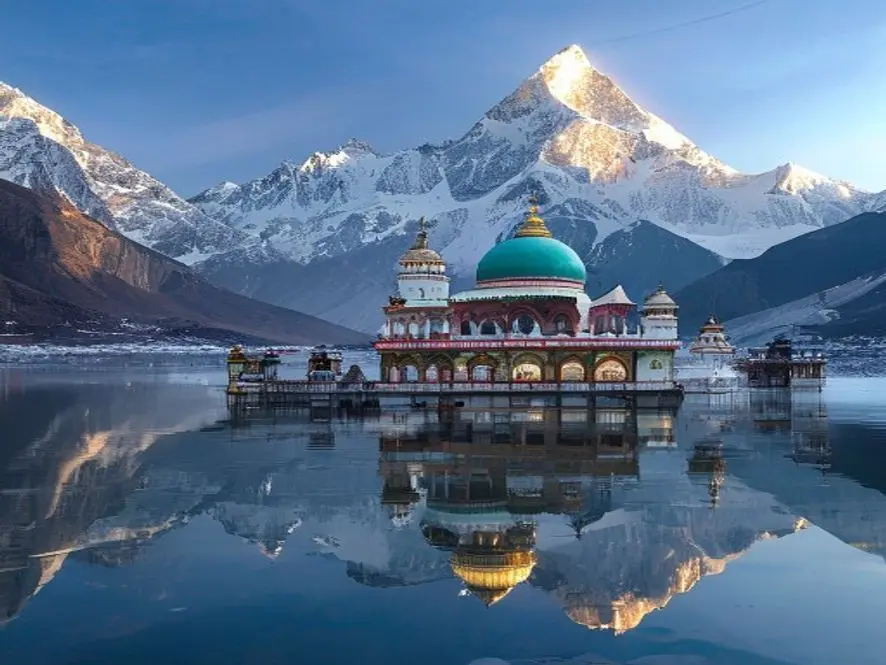
Nestled high in the Garhwal Himalayas of Uttarakhand, Gurudwara Hemkund Sahib stands as a beacon of unwavering faith and spiritual awakening. This revered Sikh pilgrimage site, situated at an altitude of about 4,329 meters (around 14,200 feet) on the banks of the pristine Hemkund Lake, offers more than just breathtaking views; it promises a deep spiritual journey for all who undertake its challenging path.
For generations, pilgrims have made the arduous trek to this sacred spot, seeking solace, reflection, and a connection to the divine. It's a place where the grandeur of nature meets the profound depths of spiritual devotion.
Table of contents [Show]
Historical & Spiritual Roots
Guru Gobind Singh Ji's Meditation
The spiritual foundation of Hemkund Sahib is deeply rooted in Sikh tradition, particularly its association with Guru Gobind Singh Ji, the tenth Sikh Guru. According to Sikh belief, this sacred place is where Guru Gobind Singh Ji meditated intensely before his birth on earth. This profound connection is mentioned in his autobiography, the Bachittar Natak, part of the Dasam Granth, where he describes a serene mountain lake surrounded by seven snow-covered peaks in the Himalayan region of Uttarakhand as his meditation site.
This historical context imbues Hemkund Sahib with immense spiritual significance, making it a powerful symbol of devotion, meditation, and spiritual awakening for Sikhs worldwide.
The Symbolism of Hemkund Lake
The name 'Hemkund' itself is derived from Sanskrit, with 'Hem' meaning 'Snow' and 'Kund' meaning 'bowl' or 'lake'. It refers to the clear, glacier-fed lake surrounded by towering, snow-covered peaks. This natural setting is not merely picturesque; it holds deep symbolic meaning.
The pristine waters and the surrounding snow-clad mountains symbolize purity and spiritual elevation. Pilgrims often find themselves reflecting on spiritual discipline and humility as they ascend to this high-altitude shrine, engaging in prayer while overlooking the serene Himalayan landscape.
The Pilgrimage Experience (Yatra)
A journey to Hemkund Sahib is more than just a visit; it is a spiritual odyssey that demands commitment, determination, and humility. Pilgrims undertake a difficult trek, often navigating rocky terrain and unpredictable weather conditions, which can change rapidly in the mountains.
A Test of Faith and Humility
The demanding journey from Ghangaria to the Gurudwara reinforces patience and devotion. This challenging trek symbolizes the difficulties faced by the Sikh gurus and their followers in their pursuit of faith and righteousness. Each step taken is a testament to one's spiritual resolve, culminating in the serene embrace of the Gurudwara and its sacred lake.
Cultural & Environmental Harmony
Beyond its spiritual importance, Hemkund Sahib is a place of immense scenic and ecological value. The area is surrounded by abundant muddy and rocky stepped forests, boasting diverse flora and fauna. This natural beauty fosters a sense of unity, as the region is also home to various ethnic communities, including Gaddis, Garhwalis, and Tibetans, creating a unique cultural fusion that adds to the charm of the place.
Planning Your Sacred Journey
Hemkund Sahib is one of the highest Sikh pilgrimage sites in the world, located in the Chamoli district of Uttarakhand. The Gurudwara is approached from Govindghat, which lies on the Rishikesh-Badrinath highway. The main town near Govindghat is Joshimath, a significant spiritual hub in its own right.
Best Time to Visit
Due to heavy snowfall, Hemkund Sahib is inaccessible from October through April. The annual pilgrimage season typically begins in May, when Sikh pilgrims undertake 'kar seva' (selfless service) to repair the paths damaged over winter. It generally remains open until early October. Checking official yatra dates before planning your visit is crucial.
The Trekking Route
The journey to Hemkund Sahib involves a trek from Govindghat to Ghangaria, followed by a further ascent to the Gurudwara. Along the broader travel route, many devotees also visit important gurudwaras in Rishikesh and Haridwar, which provide accommodation, langar services, and spiritual support.
Essential Preparation Checklist
- Carry warm layered clothing and a waterproof jacket.
- Wear comfortable trekking shoes with a strong grip.
- Keep essential medicines and a basic first-aid kit.
- Bring valid ID proof and necessary travel permits.
- Carry rain protection, sunscreen, and sunglasses.
- Stay hydrated and carry light energy snacks.
Nearby Spiritual Stops and Natural Wonders
The region around Hemkund Sahib is rich with spiritual and natural attractions. Many pilgrims combine their visit with a trip to the nearby Valley of Flowers National Park, a UNESCO World Heritage site known for its vibrant alpine meadows. Another significant pilgrimage is the Badrinath Dham Yatra, which is also in the vicinity. Additionally, towns like Joshimath, a gateway to several Himalayan pilgrimages, hold historical and spiritual significance, being deeply connected to Adi Shankaracharya's legacy in Uttarakhand.
Conservation Efforts
Given its remote location and fragile ecosystem, conservation efforts are central to preserving Hemkund Sahib and its environment. Authorities and Sikh organizations have taken initiatives to ensure responsible waste management and protection of the region's delicate ecology. Pilgrims are strongly encouraged to follow environmentally friendly practices during their visits to help maintain the pristine beauty of this sacred land.
Frequently Asked Questions
Why is Hemkund Sahib spiritually important?
Hemkund Sahib is spiritually important because it is believed to be the meditation site associated with Guru Gobind Singh Ji, the tenth Sikh Guru, before his birth. This connection makes it a profound symbol of devotion and spiritual awakening in Sikh tradition.
What does Hemkund mean?
The name 'Hemkund' is derived from Sanskrit, where 'Hem' means 'Snow' and 'Kund' means 'bowl' or 'lake'. Thus, Hemkund refers to a lake surrounded by snow-covered peaks, symbolizing purity and spiritual elevation.
What is the altitude of Hemkund Sahib?
Gurudwara Hemkund Sahib is located at an altitude of approximately 4,329 meters (around 14,200 feet) above sea level in the Garhwal Himalayas.
When is Hemkund Sahib inaccessible?
Hemkund Sahib is inaccessible from October through April each year due to heavy snowfall and glacial conditions, which make the paths snowbound. The pilgrimage season typically opens in May.
What is 'kar seva' at Hemkund Sahib?
'Kar seva' at Hemkund Sahib refers to the selfless service undertaken by Sikh pilgrims, traditionally starting in May, to repair the damage to the pilgrimage path caused by winter snows and glaciers. This concept is a fundamental tenet of the Sikh faith.
Hemkund Sahib is more than just a destination; it is a profound journey of self-discovery and devotion, a testament to firm faith, and a tribute to the unparalleled natural beauty of the Himalayas. It is a place where the temporal and the spiritual converge, offering comfort and inspiration in the peaceful embrace of the mountains.