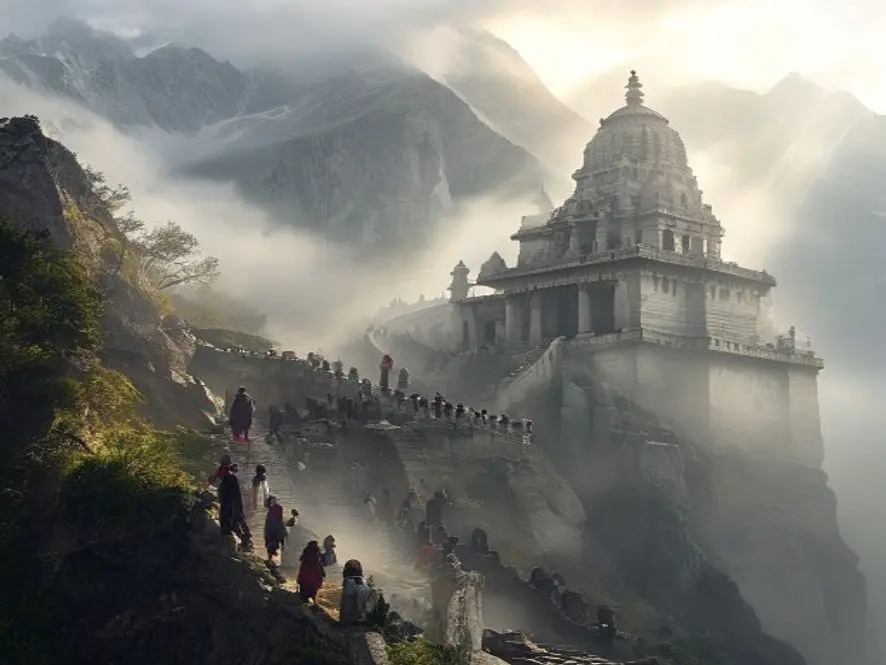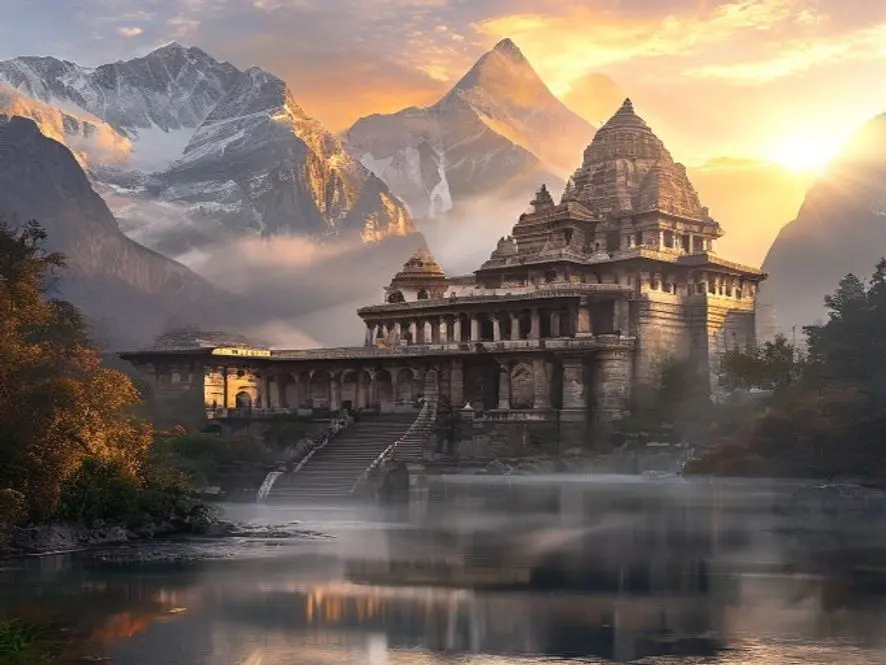
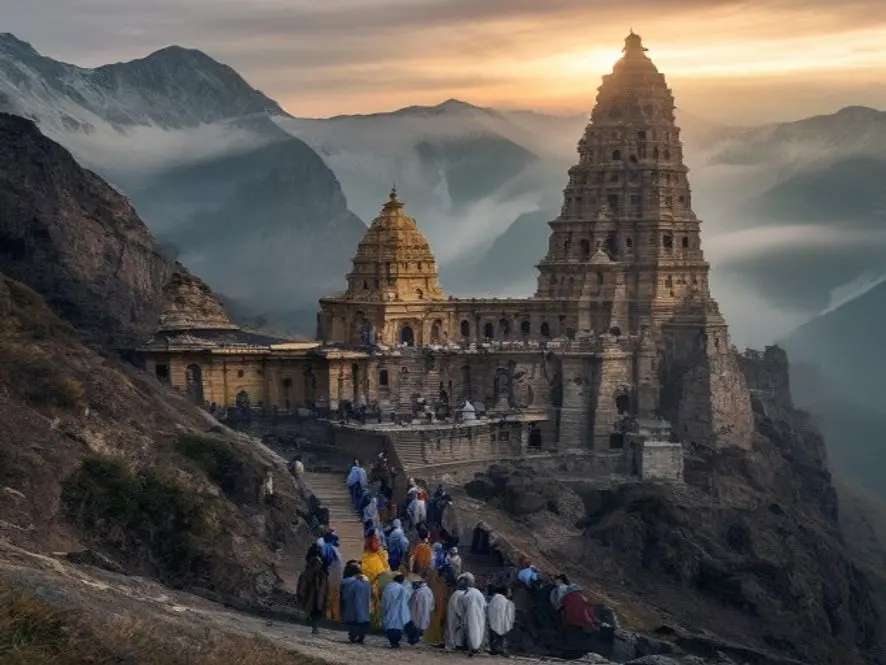
Nestled amidst the majestic Garhwal Himalayas, Badrinath Dham is more than just a temple; it's a profound spiritual journey. As one of the holiest sites in India, it holds immense religious importance, forming a crucial part of both the Chota Char Dham Yatra of Uttarakhand and the larger All-India Char Dham circuit. Dedicated to Lord Badrinarayan, an incarnation of Lord Vishnu, this sacred abode draws devotees seeking blessings and solace. The temple also shares a deep historical connection with the great Hindu spiritual leader, Adi Guru Shankaracharya, who is credited with its revival.
Table of contents [Show]
The Spiritual Heart of Badrinath
The Badrinath Temple itself is a sight to behold, standing approximately 50 feet tall with a distinctive traditional Garhwali wooden architectural style that subtly echoes Buddhist temple designs. Its facade features arched windows and robust stone construction. Inside, pilgrims are greeted by 15 idols carved from black stone, with the central idol being Lord Vishnu in a serene meditative posture.
Before entering the main temple, a customary dip in the Tapt Kund, a natural hot spring, is considered highly auspicious. This purifying bath prepares devotees for the sacred darshan of Lord Badrinarayan.
Planning Your Journey to Badrinath
Best Time to Visit
The gates of Badrinath Dham typically open in late April or early May and close in November. Choosing the right time can significantly enhance your experience:
- May to June: This is the peak season, offering pleasant weather with temperatures ranging from 8°C to 19°C. However, be prepared for heavy crowds, longer darshan queues (which can be 2-3 hours), and higher accommodation rates.
- September to October: We highly recommend this window. The monsoon rains have usually passed, roads are often freshly repaired, and the valley is lush green. Crowds thin out considerably, allowing for a more peaceful darshan, often within 30-45 minutes. The weather remains cool and comfortable, typically between 5°C and 15°C.
It's always wise to avoid the peak monsoon months (July-August) due to the risk of heavy rains and potential road closures.
How to Reach Badrinath
Your spiritual journey to Badrinath typically begins from the plains of Uttarakhand:
- By Road: Most pilgrims start their road journey from Haridwar or Rishikesh. Haridwar is approximately 300 km from Badrinath and can be covered by bus or private cab. The route is scenic, winding through the mountains alongside the Alaknanda River, passing through several significant towns: Rishikesh, Devprayag (where the Alaknanda and Bhagirathi rivers meet), Srinagar, Rudraprayag, Karnaprayag, and Joshimath, before finally reaching Badrinath. Booking your cab in advance, especially through reliable local services, can ensure a more comfortable journey.
- By Helicopter: For those seeking a quicker and more comfortable journey, helicopter services are available from Dehradun's Sahastradhara Helipad. This option often includes VIP darshan and allows for a same-day return to Dehradun, though it comes with a higher budget, typically around ₹80,000 per person. For those undertaking the full Char Dham, helicopter bookings for Kedarnath are separate and managed via IRCTC HeliYatra from locations like Phata, Sersi, or Guptkashi.
A crucial tip for road travelers: consider spending a night in Joshimath, located about 45 km from Badrinath. At 6,150 feet, it offers a vital opportunity to acclimate to the higher altitude before the final ascent to Badrinath (10,279 feet). Joshimath itself is worth exploring, with its Narsingh Temple and the Shankaracharya Math.
Exploring Beyond the Main Temple
While the Badrinath Temple is the focal point, the surrounding area is rich with mythological sites and natural beauty. We recommend dedicating at least two days to truly experience the region.
- Alaknanda River Bank: Take some time to sit by the sacred Alaknanda River for moments of peace and reflection.
- Brahma Kapal: Located near the temple, this is a significant spot where pilgrims perform rites for their ancestors.
- Panch Shilas: These five sacred stones—Narad Shila, Garur Shila, Ram Shila, Narsingh Shila, and Markandeya Shila—each hold deep religious significance and are worth visiting. The Narsingh Shila, for instance, is said to embody the power of Lord Narsingh.
- Mana Village: Just 4-5 km from Badrinath, Mana is famously known as 'India's First Village.' Here, you can visit:
- Vyas Gufa and Ganesh Gufa: These natural caves are believed to be where Maharishi Ved Vyas dictated the Mahabharata to Lord Ganesha.
- Bhim Pul: A massive natural stone bridge spanning the Saraswati River.
- Saraswati Dham: The only place where the mythical Saraswati River is visible.
- Swargarohini Dham: The path from where the Pandavas are believed to have ascended to heaven.
- Vasudhara Waterfalls: A short trek from Mana village leads to the stunning Vasudhara Waterfalls, renowned for its height and natural beauty.
- Mata Murti Temple: This Devi temple, located in the vicinity, is dedicated to Goddess Mata Murti, believed to be the mother of Lord Badrinarayan. A fair is organized here around September.
- Valley of Flowers (Seasonal): For nature enthusiasts, the Valley of Flowers National Park is a seasonal attraction near Badrinath, offering breathtaking floral vistas.
Accommodation and Food
While Badrinath doesn't offer five-star luxury, you'll find a range of decent and affordable stay options. Numerous hotels, GMVN guest houses, tourist lodges, and Dharamshalas provide comfortable accommodation at nominal fees. It's highly advisable to book your stay well in advance, especially if you're traveling during the peak season, as the area can get quite crowded.
Food facilities are readily available, offering simple, wholesome meals suitable for pilgrims.
Essential Travel Tips for a Smooth Yatra
- Dress in Layers: The weather in the Himalayas is unpredictable. Always pack warm clothes in layers, even during summer months, as temperatures can drop suddenly, and winds can be chilly. Two to three layers are often recommended.
- Acclimatize to the Altitude: High altitude can affect some travelers. Give yourself ample time to adjust, especially by staying a night in Joshimath. Drink plenty of water to stay hydrated.
- Check Permits and Documents: Ensure all necessary permits and travel documents are in order before starting your journey.
- Prepare for the Roads: The mountain roads are winding and narrow, meaning travel can be slow. Plan your itinerary with extra time for delays.
- Book in Advance: Secure your accommodation and transportation well ahead of time, particularly during peak pilgrimage seasons.
- Consider Travel Insurance: It's a sensible precaution for any unexpected events or medical emergencies.
- Online Services: The Shri Badrinath Kedarnath Temple Committee website (badrinath-kedarnath.gov.in) offers online services for pooja booking, vehicle permits, helicopter bookings, health advisories, and weather updates.
Frequently Asked Questions About Badrinath Yatra
What is the best time to visit Badrinath Dham?
The ideal time to visit Badrinath Dham is from September to October. During this period, the monsoon has subsided, roads are clearer, and the crowds are significantly smaller, allowing for a more serene pilgrimage experience. May to June is also popular but expect heavier crowds and longer wait times.
How do I reach Badrinath?
Badrinath is primarily accessible by road. Most pilgrims begin their journey from Haridwar or Rishikesh by bus or private taxi. For a faster option, helicopter services are available from Dehradun, offering a same-day return with VIP darshan.
Yes, Badrinath offers various accommodation choices including hotels, GMVN guest houses, tourist lodges, and Dharamshalas. While not luxurious, they provide decent and affordable stays. It is highly recommended to book your accommodation in advance, especially during peak seasons, due to high demand.
What are the must-visit places near Badrinath Temple?
Beyond the main temple, key attractions include the Tapt Kund (hot spring), Brahma Kapal, the Panch Shilas, and the nearby Mana Village. Mana Village is home to Vyas Gufa, Ganesh Gufa, Bhim Pul, Saraswati Dham, Swargarohini Dham, and the beautiful Vasudhara Waterfalls.
What are some essential tips for a safe Badrinath Yatra?
Key tips include dressing in multiple layers for unpredictable weather, acclimatizing to the high altitude (consider an overnight stay in Joshimath), drinking plenty of water, booking accommodations and transport early, and checking for necessary permits. It's also wise to consider travel insurance.