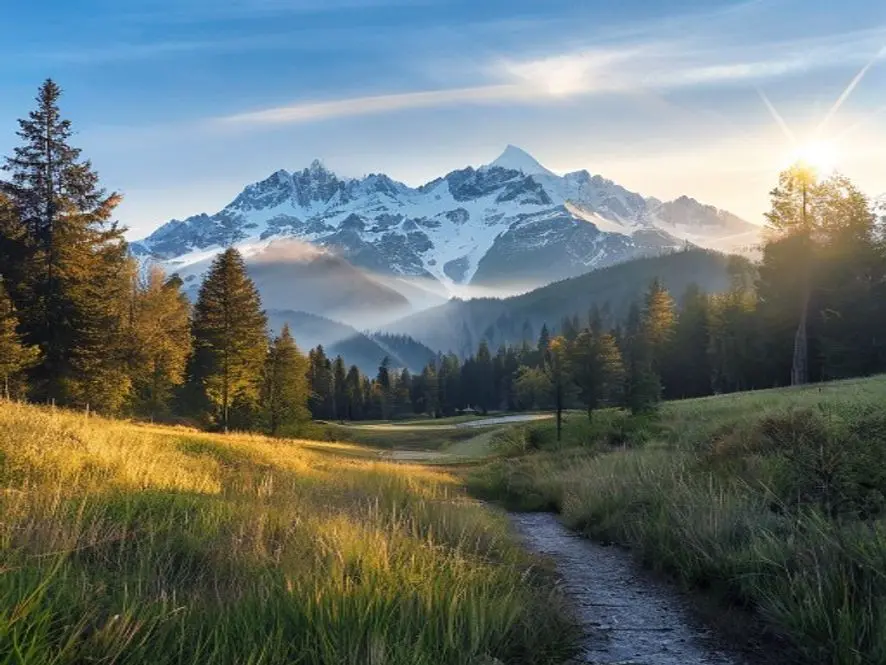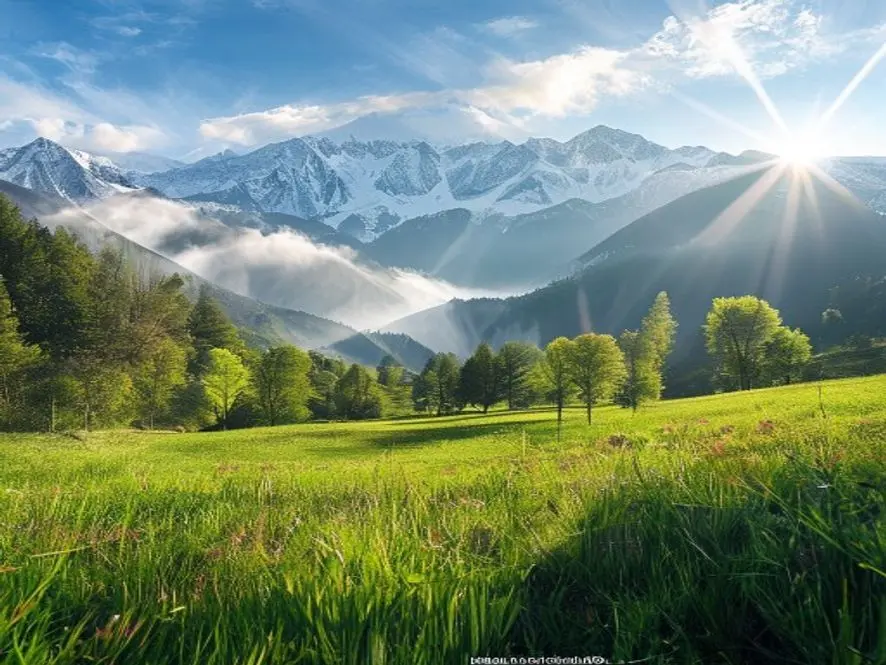
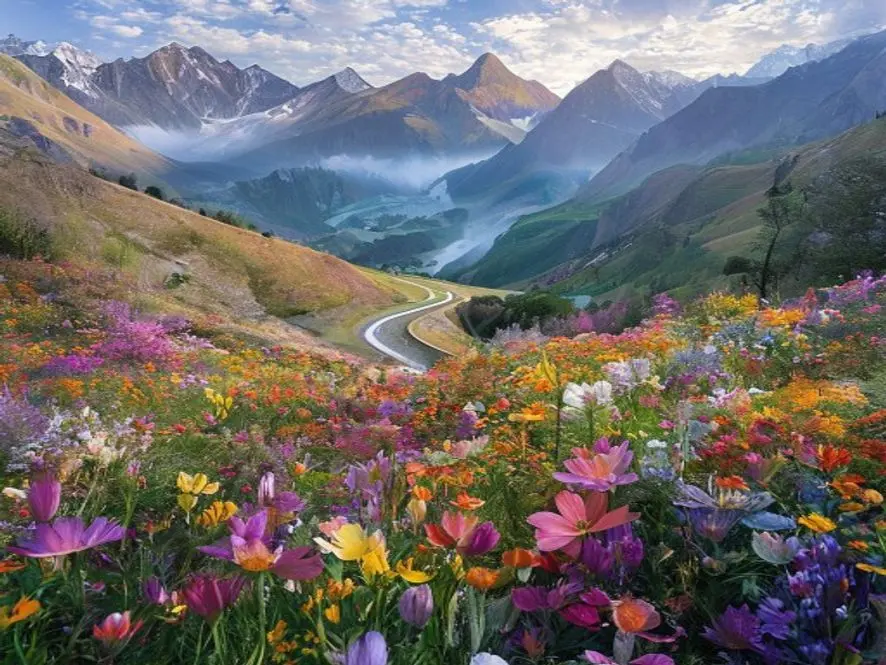
Nestled high in the Himalayas of Uttarakhand, the Valley of Flowers National Park is more than just a trek; it's a journey into a living canvas of nature. A UNESCO World Heritage Site, this valley bursts into a vibrant carpet of colors during the monsoon, offering a breathtaking display of exotic alpine flora, snow-fed streams, and serene mountain scenery. It's a destination that calls to nature lovers, photographers, and those seeking a peaceful escape from city life.
Table of contents [Show]
- 1 The Valley of Flowers: A Glimpse into its History and Significance
- 2 Best Time to Visit the Valley of Flowers
- 3 Your Trek Route and Day-Wise Itinerary
- 4 What to Expect: Difficulty, Terrain, and Visitor Notes
- 5 Safety and Travel Tips
- 6 Nearby Attractions for Extended Exploration
- 7 Why Choose a Guided Trek?
-
8
Frequently Asked Questions (FAQs)
- 8. 1 What is the best month to visit the Valley of Flowers?
- 8. 2 Is the Valley of Flowers trek difficult for beginners?
- 8. 3 What are the entry and exit timings for the Valley of Flowers?
- 8. 4 Can I combine the Valley of Flowers trek with Hemkund Sahib?
- 8. 5 What essential items should I carry for the trek?
- 8. 6 Are there any rules regarding flowers in the Valley of Flowers?
The Valley of Flowers: A Glimpse into its History and Significance
This high-altitude Himalayan valley, spread across 87.5 square kilometers in the Chamoli district, is home to over 500 species of plants. Local folklore even speaks of celestial fairies residing here and Lord Hanuman visiting in search of the Sanjeevani Booti. Its recognition as a UNESCO World Heritage Site underscores its unique biodiversity and ecological importance.
Best Time to Visit the Valley of Flowers
The Valley of Flowers is accessible for a brief window each year, typically from June to October. However, the true magic unfolds during specific months:
- June: The valley reopens after snow clearance. You'll witness melting glaciers and snow bridges, with primulas being among the first flowers to bloom. It's ideal for snow lovers.
- July & August: This is the peak blooming season. The valley is at its most vibrant, covered in thousands of flowers. Mid-August is often recommended for experiencing the valley in its full glory.
- September: While the flower density might be slightly less, September offers clearer skies and crisp mountain views, a different kind of beauty.
- October: The valley prepares for winter closure, with fewer flowers and the onset of snowfall.
Given that it's a monsoon trek, be prepared for rain and potential roadblocks due to landslides. Adding a buffer day to your travel plan is a wise decision.
Your Trek Route and Day-Wise Itinerary
The Valley of Flowers trek is generally considered easy to moderate, making it suitable for beginners and families. The total trekking distance covered is about 38 km (both directions) over four days of walking.
Typical 6-Day Itinerary:
- Day 1: Arrival in Haridwar/Dehradun & Drive to Govindghat. Your journey begins with a picturesque drive from Haridwar or Rishikesh to Govindghat (approximately 10-11 hours, 288 km), passing through scenic spots like Devprayag and Joshimath. Overnight stay in Govindghat.
- Day 2: Govindghat to Ghangaria (13 km Trek). This is where the trek truly begins. The path follows the Alaknanda River, winding through waterfalls and forests. Ghangaria serves as the base camp for both the Valley of Flowers and Hemkund Sahib.
- Day 3: Ghangaria to Valley of Flowers & Back (8-10 km Trek). The highlight of your journey! From Ghangaria, it's a 4-5 km trek one way to the Valley of Flowers. Stroll across exotic meadows, marvel at the unique Himalayan flowers, and capture pictures of the surrounding mountains. Return to Ghangaria by evening.
- Day 4: Ghangaria to Hemkund Sahib & Back (Optional, 12 km Trek). This day offers an optional, yet highly rewarding, ascent to the sacred Hemkund Sahib Lake at 14,100 ft. It's a physically demanding climb but spiritually uplifting. You can choose to rest this day if you prefer a more casual schedule.
- Day 5: Ghangaria to Govindghat & Drive to Joshimath. Trek back down to Govindghat (13 km) and then drive to Joshimath, a town steeped in spiritual history, for some well-deserved rest and recovery.
- Day 6: Drive back to Haridwar/Dehradun. Conclude your trek with a return journey to your starting point.
What to Expect: Difficulty, Terrain, and Visitor Notes
- Difficulty Level: Easy to Moderate. The trail from Poolna to Ghangaria, and further to the Valley and Hemkund Sahib, is well-laid and made up of stones, making it easy to navigate.
- Highest Elevation: 14,100 ft (at Hemkund Sahib). The Valley of Flowers itself is situated between 3,352 to 3,658 meters (approx. 11,000-12,000 ft).
- Permit Cost: ₹150 per person.
- Timings: You can enter the Valley of Flowers from 7:00 AM. It is crucial to leave the valley before 6:00 PM. Failing to do so can incur a hefty fine of ₹10,000.
- Strict Rules: The Valley of Flowers is a protected zone. Plucking flowers is strictly prohibited and can lead to a fine of ₹1,000 to ₹2,000.
Safety and Travel Tips
- Weather: Mountain weather can change rapidly. Carry appropriate rain gear, even if the forecast looks clear.
- Footwear: Wear sturdy, waterproof trekking shoes with good ankle support.
- Hydration: Maintain proper hydration throughout the trek.
- Medical: Inform your guide of any medical conditions. In case of emergencies, trekkers can be brought back to base camp on a stretcher.
- Buffer Day: Always account for a buffer day in your travel plans, especially during monsoon, due to potential roadblocks from landslides.
Nearby Attractions for Extended Exploration
Many travelers extend their journey to explore more of this beautiful region:
- Badrinath Dham: One of the Char Dham pilgrimage sites, close to the trek route, offering spiritual significance and stunning mountain views. You can also trek to Vasudhara Falls from Mana Village near Badrinath.
- Auli: Known for its sweeping Himalayan views and alpine meadows, Auli is a relaxing extension without heavy trekking.
- Joshimath: A peaceful stop to rest, explore local culture, and slow down after your trek.
- Rishikesh: Perfect for winding down with riverside cafés, yoga, and relaxed mountain-town vibes before heading home.
Why Choose a Guided Trek?
For many, especially first-time Himalayan trekkers, managing logistics during the monsoon can be challenging. Joining a structured group trek offers several advantages:
- Logistics like accommodation, food, and transport are pre-arranged.
- Group support enhances safety and camaraderie.
- Expert trip leaders provide guidance and assistance throughout the journey.
- You can focus purely on the experience rather than the planning.
The Valley of Flowers trek is not about speed or thrill; it's about slowing down and experiencing nature at its most vibrant. Its short blooming season makes every visit feel special, leaving travelers with peaceful and unforgettable memories of the Himalayas.
Frequently Asked Questions (FAQs)
What is the best month to visit the Valley of Flowers?
The best time to visit the Valley of Flowers is from mid-July to mid-August. During this period, the valley is in full bloom, showcasing the maximum diversity and vibrancy of its alpine flowers.
Is the Valley of Flowers trek difficult for beginners?
No, the Valley of Flowers trek is considered easy to moderate and is suitable for beginners and families. The trails are well-marked and mostly consist of gradual ascents on stone paths.
What are the entry and exit timings for the Valley of Flowers?
Visitors can enter the Valley of Flowers National Park from 7:00 AM. It is mandatory to leave the valley before 6:00 PM. Strict fines are imposed for non-compliance.
Can I combine the Valley of Flowers trek with Hemkund Sahib?
Yes, many visitors combine the Valley of Flowers trek with a spiritual journey to Hemkund Sahib. Both share the same base camp at Ghangaria, allowing for a dual trek opportunity. The Hemkund Sahib trek is optional and more challenging.
What essential items should I carry for the trek?
Given it's a monsoon trek, carry good quality rain gear (jacket and pants), waterproof trekking shoes, warm layers, a first-aid kit, personal medications, a headlamp, a power bank, and a sturdy backpack. Don't forget your camera!
Are there any rules regarding flowers in the Valley of Flowers?
Yes, the Valley of Flowers is a protected UNESCO World Heritage Site. Plucking any flowers is strictly prohibited and carries a fine of ₹1,000 to ₹2,000. Visitors are encouraged to observe and photograph the flora without disturbing it.